


Ron Brown Art Collections
Shop for artwork from Ron Brown based on themed collections. Each image may be purchased as a canvas print, framed print, metal print, and more! Every purchase comes with a 30-day money-back guarantee.
Artwork by Ron Brown
Each image may be purchased as a canvas print, framed print, metal print, and more! Every purchase comes with a 30-day money-back guarantee.

Count The Squares by Ron Brown

Blue Planet by Ron Brown

Bingo1-0-C by Ron Brown

Blue Eye by Ron Brown

Rotated Blue Triangles by Ron Brown

Des Fleurs by Ron Brown

64 Shades of Grey - 1 - Has Small White by Ron Brown

Cheerios-C by Ron Brown

64 Shades of Grey - 1 - Has Small Black by Ron Brown

Sudoku Connections on White by Ron Brown

Galaxies by Ron Brown

Universal Strings by Ron Brown

Cheerios-MicroManaged by Ron Brown

Sudoku Connections Glass Mosaic by Ron Brown

Sudoku Connections Wave by Ron Brown

Sudoku Connections White Wave by Ron Brown

Blue-Green Petals by Ron Brown

Red Star by Ron Brown

Cheerios-MicroWaved by Ron Brown

Around We Go by Ron Brown

Pop Star by Ron Brown

Cheerios Pattern Wave by Ron Brown

Blue Flares by Ron Brown

Red Flares by Ron Brown
Displaying: 1 - 24 of 66
About Ron Brown
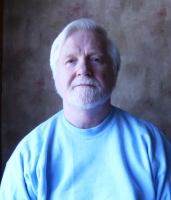 Ron has a BA degree in mathematics (magna cum laude - William Jewell College, Liberty, MO), an MA degree in mathematics (University of Kansas, Lawrence, KS) and an M Ed degree (Montclair State University, Montclair, NJ). For nearly thirty years he has been a software engineer. For many years he has been fascinated by the complex patterns and structures that can evolve from a simple knight moving on a chessboard. Recently, he has begun to explore the possibilities that the puzzle, Sudoku, can provide as well as Bingo and scanned barcodes. His artistic expressions are, in essence, the result of numerical conversions. Many of the images you see are single frames from animation sketches created using Processing - see below.
He has been a presenter at several conferences dealing with the interdisciplinary approach to learning integrating art, math, science and technology. His ideas have appeared in several publications and in books by Dr. Clifford A. Pickover. In 1992, Leonardo - Journal of the International Society for the Arts, Sciences and Technology, was the first to publish his ideas. In 1995 he was one of over 40 artists featured in a videotape produced by the late sculptor, Rob Fisher, entitled "The Computer: A Tool for Sculptors". He has been listed in Who�s Who in the East, Who�s Who in America and Who�s Who in the World. [View paper presented at Towson University, MD in 2002 -> http://brown.symmetry-us.com/2010/08/05/knight%E2%80%99s-tour/]
Over the years he has expanded his explorations of knight moves to include music, weaving and Islamic-style tiling patterns. His mind is full of ideas - of mammoth constructions, the use of lasers and computer-controlled sculptures utilizing motors, and more.
Recently, he has begun to augment his artistic explorations by utilizing the computer programming language, Processing, developed at MIT specifically for artists. He believes that Processing can be used as a tool to turn STEM into STEAM - where the 'A' represents the "Arts' being added to the emphasis on science, technology, engineering and math. On June 22, 2012 he was a presenter at a STEM to STEAM conference held in Baltimore, MD where he talked about a computer programming course (on Processing) he had recently taught at a small independent high school. The reader can view his presentation at this web site. Scroll mid-page and click on 'Programming with Processing ...' - all the images were created by the students.
If one needs to categorize him, he would describe himself as a �computational� artist or a "generative" artist. His artistic explorations can best be described as 'concrete art' as espoused by the Swiss artist, Max Bill, in the early to mid-twentieth century. He finds support for his approach by statements such as the following:
Pythagorus (570 BCE � 495 BCE): �Number is the measure of all things.�
Heraclitus (535 BCE � 475 BCE): The hidden harmony is better than the obvious one.�
Philolaus (470 BCE � 385 BCE): Number is the bond of the eternal continuance of things.�
Wassily Kandinsky: "The final abstract expression of every art is number."
Wassily Kandinsky: "The more abstract is form, the more clear and direct is its appeal."
Max Bill: "I am of the opinion that it is possible to develop an art largely on the basis of mathematical thinking."
Max Bill: "Where does structure end and art begin?"
Cyril S. Smith: "Everything that we can see, everything that we can understand is related to structure - perception is in patterns not fragments."